
Corporate Finance: Driving Innovations and Trends for Tomorrow
Conclusion:
Corporate Finance Trends: Innovations, AI & M&A in 2025
Corporate Finance: Driving Innovations and Trends for Tomorrow
Corporate finance handles all matters of the company from a financial perspective. The corporate finance landscape is already being reshaped by such forces as treasury management innovations, greater integration of AI in financial planning and forecasting, and other trends in mergers and acquisitions (M&A). Innovations In Corporate Treasury Management Here we take a look at various innovations in corporate treasury management that have occurred in recent months.
New Directions in Corporate Treasury Management
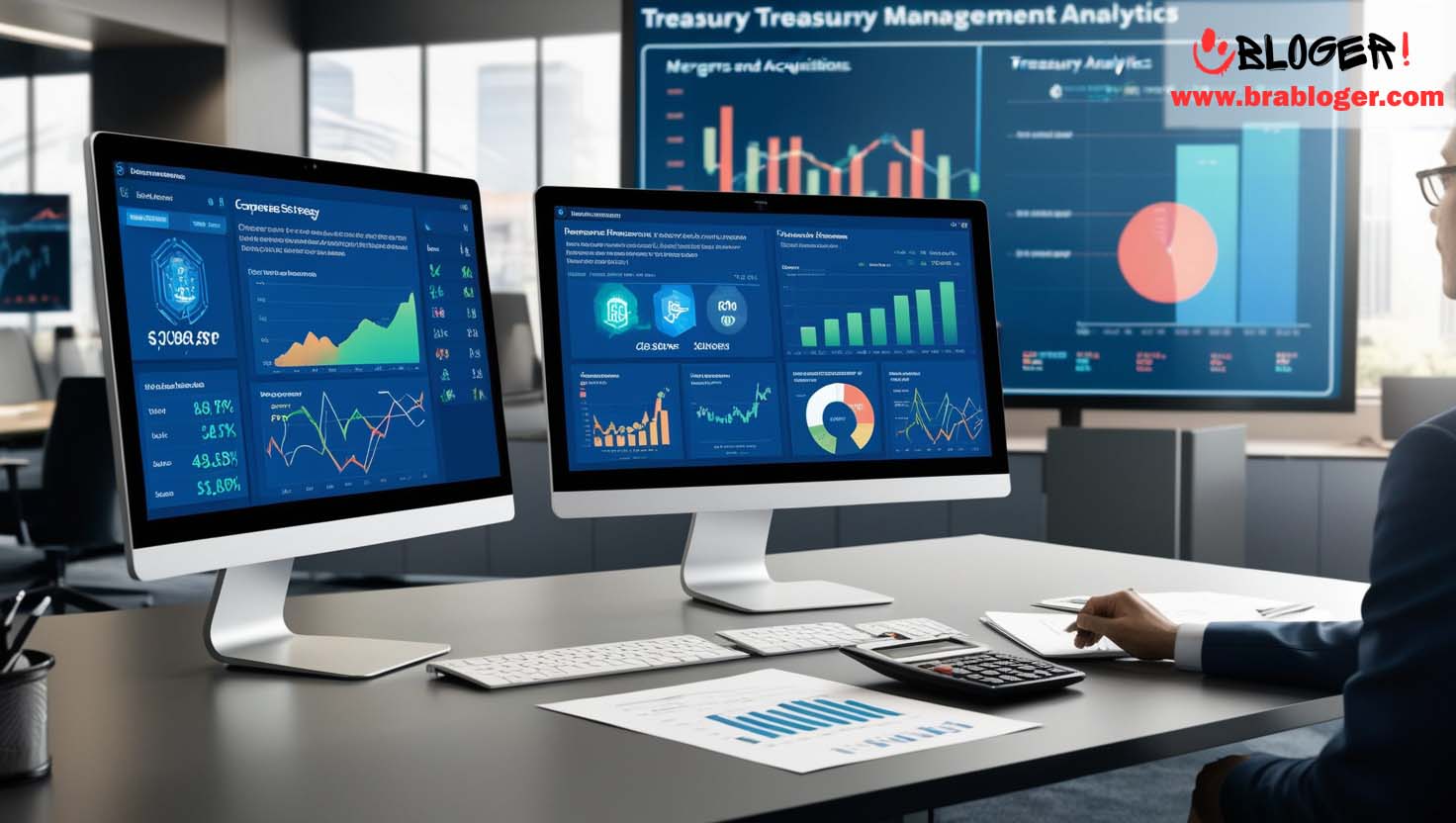
The Corporate Treasury Management has transformed dramatically in the past few years. With the increasing globalization of businesses and the complexity of financial landscapes, corporations are turning to technology and innovative solutions to optimize cash flow, manage risks and ensure liquidity. Corporate treasurers are evolving from day-to-day operational roll, just managing cash and liquidity, to one that needs to strategically manage not just financial risks, but capital allocation in an increasingly volatile world.
a. Treasury Management Systems (TMS) & Automation
Advanced Treasury Management Systems (TMS), for example, is one of the major innovations in the corporate treasury area. They are used to centralize cash management, track liquidity and enhance financial reporting. Many traditional systems depend on manual processes, resulting in inefficiencies, errors and delays. TMS software automates many treasury tasks, freeing up treasurers to devote time to higher-level pursuits.
For example, Kyriba and Reval provide companies with real-time cash visibility, integrated risk management, and automated payments, allowing businesses to effectively handle their financial operations. In this way, these systems can improve decision making and help identify potential liquidity challenges through cash flow forecasting, transaction management or investment management features.

b. Blockchain Technologies and Smart Contracts
Another innovation making inroads into corporate treasury management is blockchain technology. It was only by using a computer and a series of steps to sell the vaults that blockchain was set to revolutionize many industries, including treasury operations, due to its ability to establish secure, transparent and decentralized financial transactions.
As an example, companies are looking at smart contracts which can automatically trigger payment based on pre-set conditions. Such smart contracts can automatically trigger payments when certain criteria are met, resulting in fewer middlemen and faster transaction settlement. Not only does this lower operational costs but reduces the potential for human error and commit fraud as well.
This is a third Part of 6 Articles: about Artificial Intelligence in Treasury Operations.
Through AI and machine learning (ML), treasury is adopting new technologies to further drive efficiency, improve risk management, and provide tools for day-to-day execution. AI could be used on treasury by delivering predictive analytics for cash flow forecasting, identifying anomalies in financial data, and even automating decision-making processes. AI-enabled systems, for example, can monitor market trends and provide insight into possible currency and commodity threats, allowing companies to hedge more effectively.
Incorporating AI in treasury operations, organizations can achieve enhanced forecasting in market movements, maximize cash reserves, and enhance liquidity management — all essential elements in mitigating financial risk.
Artificial Intelligence in Financial Planning and Forecasting
With access to data until October 2023 artificial intelligence is disrupting financial planning and forecasting allowing organizations to make data-driven decisions. AI can process large datasets, recognizing trends and offering anticipatory information that traditional financial planning approaches could never deliver.
a. Financial Forecasting using Predictive Analytics
Using machine learning algorithms, AI-predictive analytics helps organizations forecast upcoming trends and plan their budgets accordingly. For instance, AI algorithms can sift through historical financial data, market conditions, and macroeconomic variables to predict future revenues, expenses, and cash flows. This helps companies to better plan their finances as they get an accurate view of their financial forecast.
AI can analyze a wider range of variables, making it more efficient for businesses with complex financial structures or those operating in volatile markets. Through machine learning, AI models can iterate on their predictions as time goes on, perfecting forecast accuracy and allowing for improved decision making in finance.
b. Automating Routine Financial Processes
Automation of routine tasks is another key use of AI in financial planning. AI can help automate and streamline repetitive functions such as budgeting, expense tracking, and financial reporting. AI-powered tools can help finance teams automatically categorize transactions, reconcile accounts, and generate financial reports, which saves time and resources.
When these time consuming tasks are automated, companies can devote their finance teams' time to strategic initiatives like finding growth opportunities or managing financial risk. Moreover, minimizing human error thanks to automation increases the accuracy of financial data.
c) Improved Risk Management and Scenario Analysis
Artificial intelligence can also improve risk management by simulating various financial scenarios and forecasting the likely results. It enables businesses to calculate the financial impact of different risks — like changes in interest rates, currency fluctuations or regulatory changes — and determine how to mitigate them.
For example, AI-enabled scenario analysis tools can model how various future market environments might impact a company’s financial viability. This enables organisations to develop contingency plans and provide necessary financial strategies in view of potential risks.
d. Robo Advisors Powered by Ai
Alongside automating back-office functions, AI is also being utilized in the development of financial advisory platforms. By analyzing enormous amounts of data, these AI-based tools can deliver tailored financial advice to people and businesses based on their financial goals, risk tolerance, and market performance. AI can assist businesses in optimizing their capital allocation, investment strategies, and financing choices by analyzing large volumes of financial data.
2025: THE YEAR OF ACQUISITION – What Does It Mean for M&A?

Mergers and acquisitions (M&A) are still an essential means for growth and expansion in companies across the globe. Looking ahead to 2025, a number of trends will shape global M&A activity in the years to come.
a. A Greater Spotlight on Technology and Innovation
Pressured by the rapid pace of digital transformation, corporations are all the more interested in acquiring technology firms or digital platforms that will bring in-house the very capabilities they are trying to build (through training or remote access) in the first place. For example, manufacturers and retailers might look to tech companies to help integrate automation, AI, and e-commerce capabilities into their business. Q4 2023 Crossing the 2023/2024 M&A Market: Definitive Opportunities for 2025
This will be most evident in health care, which will see a transition toward telemedicine, biotech, and health-tech, and in financial services, a field that will undergo unprecedented fintech innovations for transactions and investments.
b) Strategic ESG Acquisitions
ESG is now front-and-center for companies when evaluating potential M&A targets. The meaning of sustainability for both investors and businesses is growing and the M&A agenda is aligning with this. Companies are buying up companies that are aligned ESG-wise or have sustainability credentials to be attractive to socially-conscious investors and comply with regulations.
Due to the increasing focus on sustainability and international climate change laws, companies in the renewable energy, sustainable agriculture, and electric vehicle sectors will be leading targets for acquisition in 2025 and beyond.
c. Global Expansion and Cross-Border M&A
Globalization remains a key driver for cross-border M&A activity as companies look to penetrate new geographic markets in an effort to broaden their customer base, diversify revenue streams and minimize market risk. The growth will particularly apply to the emerging markets of Asia, Africa, and Latin America where companies will find their strong holds of new customers to build their base of customers worldwide.
As political and economic stability improves in some parts of the world, international deals should become increasingly standard as companies seek to cash in on favorable conditions abroad or find fresh avenues for growth.
d. Financial and Strategic Buyers
Private equity firms are expected to remain a dominant force in mergers and acquisitions in 2025, as they look to acquire undervalued companies and pursue consolidation opportunities. (The focus of many private equity firms is on acquiring businesses that can be improved and drive productivity in the future).
Corporate raiders and other strategic buyers, who often seek synergies or competitive advantages, will also continue to be a dominant force in M&A activity. These acquisitions can be attractive when a buyer already has an existing operation, especially on the triangle within the same value chain.
e. Regulatory & Antitrust Considerations
As M&A heats up globally, regulators will remain under pressure to press scrutiny on deals — especially when corporations become involved. Governments will pay more attention to preventing monopolistic behavior and to making sure deals do not kill competition. Companies will need to tread carefully around the regulator gauntlet in 2025 to ensure M&A deals receive the green light from antitrust authorities.
It is a fast-evolving area driven by technological change and, also, by changing market conditions. Here are some of the latest trends in corporate treasury management, AI for financial planning and forecasting, and M&A trends that are reshaping the way companies do business and grow. These shifts can lead organizations to be well-positioned for generations to come in a competitive and ever-evolving global marketplace.
Looking forward to 2025, companies that are able to remain proactive in steering these trends—by leveraging emerging technologies, enhancing their M&A strategies, and reinforcing themselves against potential economic downturns—will be better positioned to thrive in the increasingly complex landscape of modern corporate finance.




 Digital Marketing and Online Business
 Education and Learning
 Gaming
 Blockchain and Cryptocurrency
 Climate and Environmental
 Finance and Investing
 Health and Wellness
 Technology and Artificial Intelligence
 Food and Cooking
 Fashion and Beauty
 Sports and Fitness
 Personal Development and Self-Improvement
 Parenting and Family Life
 Pet Care and Animal Welfare
 Bilar och motorcyklar